Dina L. Relles

writer. editor. curious + common.

“Stop at the corner!” I call ahead to my two older boys as they bike the half-mile between our home and “school.” I’m pushing the baby in an umbrella stroller weighed down by at least five bags of blankets, lunch boxes, changes of clothes, sippy cups, and who-knows-what-else like a veritable pack mule.

Each of my three sons started day care at six months old, when I returned to work. With our first, I stressed over the nanny vs. day care decision. We chose day care. And then we chose it again. And then—even when it was no longer cost-effective, we chose it again.

I was in love.

photo-79

In love with the teachers…

If nothing else, it is my humble hope that this post is my inevitably insufficient thank you note to them. My feeble attempt to express the endless gratitude I have for how they helped me become a mother and raise my children during our poignant, tumultuous early years together.

The teachers who witnessed my son’s first steps.
Who filled out a daily report for each of my kids—every.single.day. (All of them saved.)
Who taught me when it was time to buy my son “real shoes.”
Who observed, with keen insight, the nuances of my sons’ distinct personalities.
Who knew I was pregnant with my second nearly before I did.
Who allowed my children to explore with paint and sand and water and dirt in a way I don’t always (ever??) like to do in my own home.
Who taught them the ABCs and how to give “gentle touches”—to love learning, to play well with others.
Who taught me to care less about the mess of parenthood and more about savoring the milestones.
Who took all three of my children, daily—without question, without guilt.
Who made it possible for me to get as close as I could to having it all—who served as my support system as I was leaning in and out and all over the place.
Who have loved my kids as their own.

I’ll never forget the first time my son came home smelling like someone else. And how I came to love that—because it meant I wasn’t the only one looking out for him in the world.

In love with the other parents…

Their children were my sons’ first friends; they were my lifeline. These were my people, after all. We were all burning the candle at both ends, missing our kids when we were at work, fitting in work when we were with our kids, savoring the weekends with them, then savoring the Monday morning silence without them.

We’ve been through the difficult drop-offs together—caught between a crying child and the demands of work that impatiently awaits. We whisper conspiratorially in the hallways about the new teacher or biting policy. We exchange knowing expressions of exhaustion and empathy. I tuck in your shirt tag as you fly out the door; you lend my son pink Crocs when he’s potty training and I failed to send back-ups.

We are a team, us day care parents. We’re in this together. We “get” each other like no one else does.

* * *

You can’t hide at day care. You’re there every day—the good ones and the bad. They’ve seen you rushed, stressed, haphazard, put-together, victorious. Incredibly pregnant, and then immediately postpartum. They’ve seen you. They see you. And they help. Every time. Every day. They are a constant, a comfort.

But today? Today we move on. Preschool graduation for my oldest; a move out of town for us all. We’re ready.

But I will never forget the feeling of walking through that glass door and into those pale yellow hallways, the warm familiarity washing over me, the sudden and calming relief of knowing you’re not alone. That there are people all around you, ready to lend a hand. To love your kids, to lift you up. To give you the strength, support, and community you need to keep going.

To the people of day care, to “my people”: you have been there since the beginning—and every day after that. We are ever grateful. And we will miss you dearly.

photo-80

Some days are harder than others. Some days Husband says he’ll be home from hospital rounds at Noon and he doesn’t appear until 5. Some days the boys wake by 6, and all at once, before coffee. Sometimes there are several tantrums before 7, spilled oatmeal, resistance to wearing pants, sibling spats, and missed naps.

In the grand scheme of things, all No Big Deal. But still. Some days are harder than others.

Saturday was one of those days.

Hours stretched out before us, with no plans. After a morning at the local park, the boys painted their nails “teal” on the front stoop (yep), and we found ourselves at home…restless and defiant. By the time they’d made a “soup” of all the pillows and toys and diapers and sundry items around the house on the landing at the foot of the basement stairs, I’d had it. There was some (ok, maybe a lot of?) yelling, no listening, tears at the kitchen table (mine), and an exasperated sense of surrender.

The "soup"--halfway there.

The “soup”–halfway there.

Then a funny thing happened. We took a drive. (I’d like to say we walked, but this time, it was a drive, spent as we were.)

I corralled my three boys and, in various states of undress, we set out, blinking hard as the midday sun hit our eyes. The breathtakingly perfect sky and crisp, warm air seemed to mock the disarray we had left behind.

We piled into our well-loved (read: filthy) Dodge Grand Caravan.

And we drove. To nowhere.

IMG_5552

I instinctively turned on the radio at high volume. But this day, my middle son objected, requesting “quiet time.” So instead we rolled down the windows and listened to the sounds of our city.

There was life on every corner. Street fairs and flea markets, women with green eyebrows and black nails peddling knick-knacks, men in muscle tees selling suits hung from park fences, heavily-accented vendors chatting amongst each other and with the infrequent customer.

A drum parade marched down gritty Market Street, horse-drawn carriages plodded through the picturesque historic district, multiethnic tourists slow-walked absently across its intersections, a rowdy bridal party passed our window as we were stopped at a red light – “congrats” we called out; they waved.

The boys’ senses were heightened: bucket trucks engaged in a roof repair, the sun danced on the Delaware River, a band played music at a local carnival, the pungent smell of fresh produce and meats filled the Italian Market…

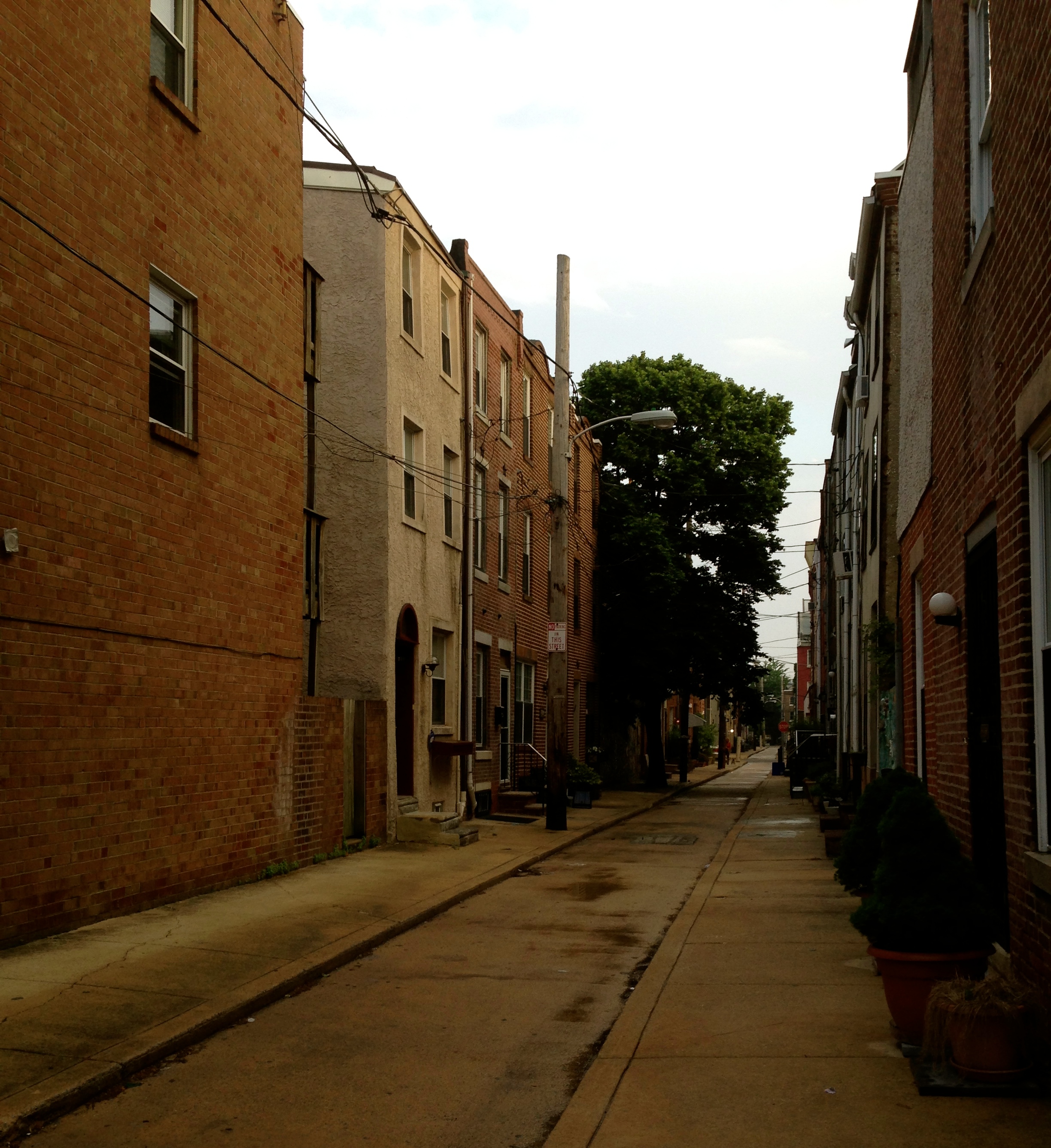
We drove down busy commercial streets, teeming with teens in big hair and booty shorts, arm awkwardly in arm with their baseball-capped beaus; residential streets dotted with blonde families and fresh-faced, well-dressed, skipping children who (in my mind anyway) hadn’t been yelled at today—or maybe ever; and quiet alleys with serene, stately houses and hanging vines—all beauty and wealth and no sign of life.

Noise and hum returned as we reached the poorer residential neighborhoods, featuring post offices and gas stations, dry cleaners and fast-food joints; kids pushing kids in strollers, cars parked in the median, and people on every stoop.

Beer festivals, outdoor dining, open houses, and moving trucks.

We drove through the streets of this city we love; this city we’ll leave…

photo-72

I was overcome by how much life was pulsing through this place on this glorious pre-summer afternoon, just beyond our four walls…

As we passed a baseball game played by kids not much older than mine, I felt a pang of recognition that our days of unscheduled bliss are numbered. Not long from now, we will contend with back-to-back this-and-that, commitments, conflicts, and carpools—pulling us in different directions, away from each other.

Tethered as I may sometimes feel, there is a simplicity, an ironic freedom to this time with my young children. Initially, I was envious of the carefree twenty-somethings we passed on our way, dining streetside at cafés I once patronized. But then I turned my attention inward, to the little beings in my backseat. Safely secured, under one roof. Together.

With every block we traveled, their empathy slowly returned, as did my patience. My oldest gestured at a coffee shop, thoughtfully suggesting I get some. We saw the ice cream truck, but the boys accepted that we were only driving by, not stopping to purchase. I told them stories of how my grandparents would often take their three sons for drives back in the 1950s Midwest. “Were they going somewhere? Did they drive as long as we are?” I didn’t know.

When the older boys dozed off, I pulled over to write these words.

We drove for so long that we were able to pick up Husband at the end of his shift. When we finally met up, “I’m sorry I look so disheveled,” was all I managed to say. “You look beautiful to me,” was his response.

I’m lucky and in love with my life. But there are hard days. And beautiful drives that take us out and pull us back in, all at once. You could say we escaped. But getting out was just what we needed to bring us back home.

IMG_4677

Last week, I wrote a post reflecting on these first months of writing. I loved writing it, sharing it, and reading people’s reactions. As circular as it may seem, writing (and reading!) about writing is one of my favorite things.

{A brief digression, because my setting as I write this seems worth mentioning: I’m sitting in the rocking chair where I nursed my sons, window open, with a view of our local park. I haven’t written here before; I’m not sure why. Perhaps because it’s all the way on the 3rd floor of our vertical row home, but truly, it’s perfect.}

In that post from last week, I mentioned that I was considering changing the name of this blog from Coffee, Kids, and Common Things to simply “Common Things” and asked readers to weigh in.

The original name had grown cumbersome, and, I felt, didn’t truly reflect what the site was about. It was more of a distraction that a draw. Of course, I love coffee. And I love my kids. And they both fuel my writing more than most anything. But after a few months of writing regularly, I’ve realized that the recurring theme, the real heart of my content are “common things” – either finding beauty in the ordinary, mundane, everyday, or reflections on those things we all have in common, that bring people closer together—like fear, love, parenthood, a desire to feel less alone.

Then, my wise, thoughtful uncle (-in law, actually) George, from his corner of the world clear across the country, left a comment that said simply:

As for the title, if you decide to change it, consider “Commonplace.” This is perhaps an archaic term but it fits. I keep a book of Commonplace on my computer, a collection of quotes and ideas that contain wisdom and meaning…much like your writing.

Aha! Light bulb moment. I read his comment before a long walk, and as I traveled the distance between 17th & Spruce and home, I fell in love.

I love that this new name evokes many things:

This blog.

Which I always hoped would become a place where people could virtually gather, feel understood, and know that they are not alone—that we’re in this crazy beautiful life together. That at least someone out there “gets it.” After all, while done in solitude, reading and writing is, at its core, about connecting with others through words.

Our beloved stoop-sitting.

Which transforms our private home into more of a common place indeed.

Parenting groups.

As a first-time mom, my weekly parenting class and breastfeeding support group became key sources of support and strength. The voices of those other new mothers and our insightful facilitator are still the ones in my head as I navigate parenting, one day, one decision at a time. As a participant with my third son, parenting class was where I first worked through my epiphany that I wanted to change direction and do prenatal and postpartum support work—including facilitating similar groups for the next generation of new mothers.

At their core, new moms (or dads) groups serve the critical purpose of bringing new parents together, of giving them that common place to feel supported, less alone—and realize that, indeed, their concerns, fears, struggles are shared, commonplace even. Burdens feel lighter when you share them with others.

Making the world feel a little bit smaller.

Which arguably is the central theme of this blog, my writings, energies, and thoughts. My writing, this site, is about creating community, finding common ground, discovering that which is universal despite difference.

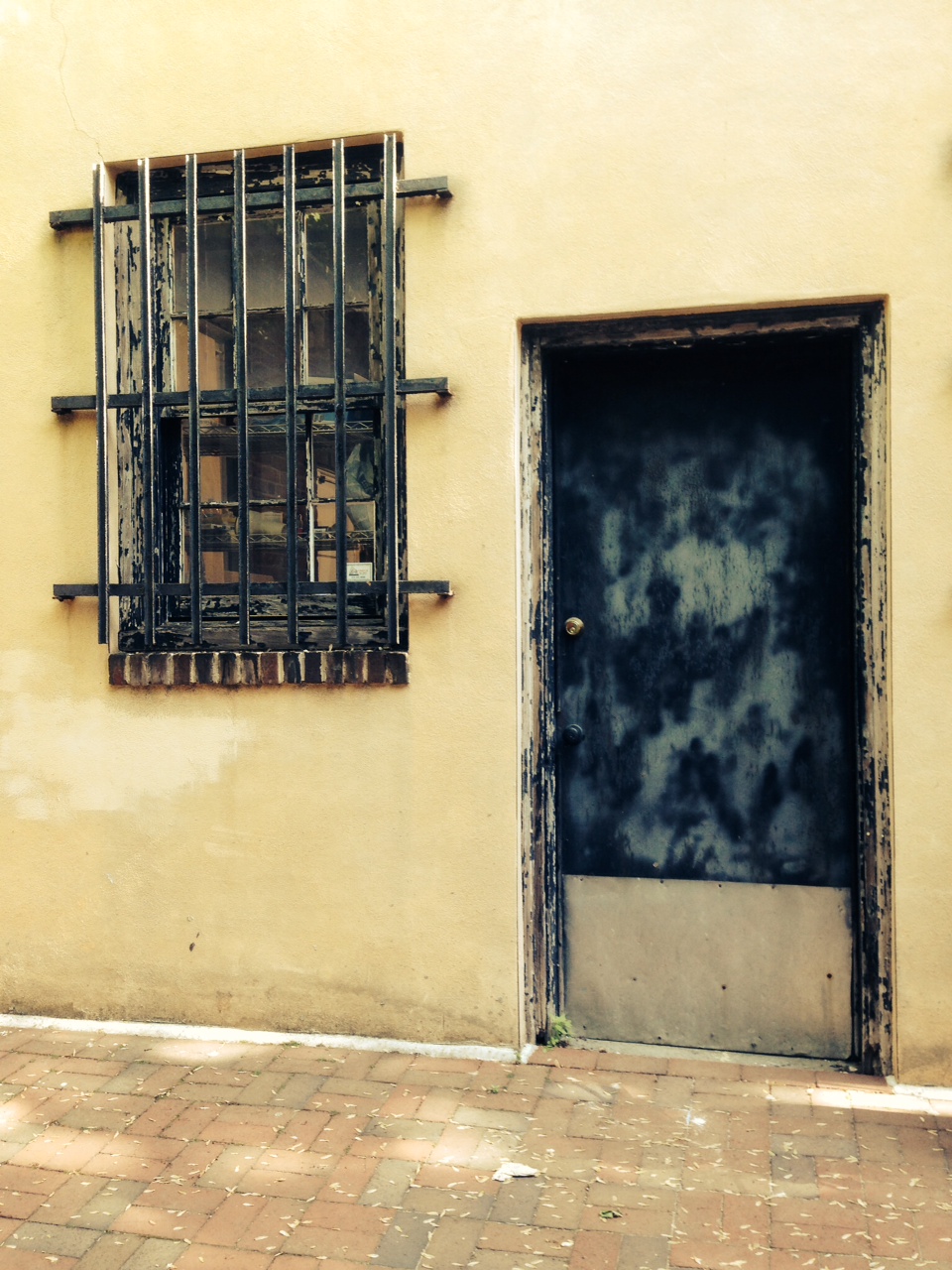
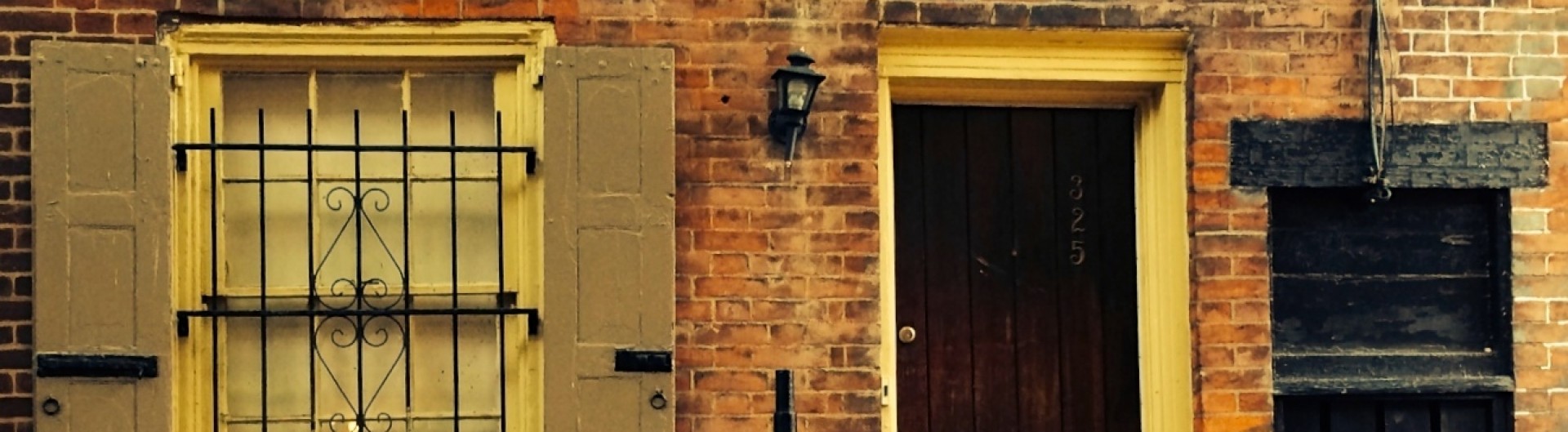
For years (and still today), I snapped pictures of windows and doors wherever I’d go. New York City doors, Santorini, Greece doors, Florence, Italy doors. I found these to be consistently and breathtakingly beautiful, everywhere.

photo-59

Italy Door

There is truly beauty in the everyday; meaning in the mundane.


Parenting itself challenges and inspires us to find the beauty in the often rote routine of our daily lives, in the seemingly smallest moments–to see the world anew through our children’s eyes.

photo-70

While writing this, it occurred to me that I had used this very word—commonplace—in a different post just last week, when I was describing why I’m so committed to sitting on our front stoop with my kids. The exact quote was,

“I want them to marvel at the commonplace, the everyday. To not need anything more. The landscape of our city street, these passers-by, this steady rhythm of life being lived. This is entertainment enough.”

Commonplace. Yes…the more I thought about it, the more perfect it felt. Given my recent career shift, I truly believe it’s never too late to make a change–if it’s what feels right.

It’s fitting that the name of this site would be communally conceived. In the comments section. Where it’s not just my voice, but collective wisdom that governs.

Together, we can discover the beauty in the everyday, that there is more that unites us than divides, that we are more alike than we are different—that we share this space, this place.

This Commonplace.

Welcome home.

photo-61


I started writing regularly a mere six months ago. I jumped in with eyes wide shut.

I’ve had a love affair with words for as long as I can remember. Grade school spelling bees, “word of the day” e-mails, trying out new ones, being affected by them, affecting others. The “novel” I (hand)wrote on loose leaf paper when I was 10—about a young girl with Leukemia—still sits crumpled in the back of one of my drawers, its tattered pages hole-punched and bound by fraying yellow yarn.

As a litigator, my greatest pleasure came from drafting. Briefs, motions, even research memos and client summary letters. I once savored the opportunity to write a Third Circuit appellate brief, pouring my heart and soul into crafting its cogent, meticulous arguments.

Then, one November morning, as I was readying the boys for day care, having digested more than my fair share of Huffington Post Parents articles that week, I had a thought I couldn’t shake:  Why not me?

photo-65

I did some, but probably not enough, research into choosing a blog name. (In fact, I’m thinking of shortening it to simply “Common Things” and would welcome your thoughts!) I wrote and I pitched and I published…and so it began. Now I’m hooked. I don’t know where it will all lead, but I’m (uncharacteristically) at peace with that.

After each of my sons was born, I always went back to work, full of reflection and reminiscence, when they were six months old. So it feels somehow appropriate to pause and process what I’ve learned so far, six months in:

1. FIND YOUR PEOPLE.

Find your role models, those you admire—whose words touch your soul. Each and every time. You will read their writing and the ache of recognition will cut so deep, it hurts. These are your writer crushes. I have several. When you find those people, don’t let them go. Follow them, visit their blogs—often, engage with their words. Allow them to inspire you, to make you want to be better, dig deeper. Hopefully they find you back—but don’t make too much of it if they don’t.

You may find yourself in a circle of people who are all referring back to each other, and it may feel like you’ve crashed their middle school lunch table. You probably have. So what? Pull up a chair; I bet they’ll scooch over to make a little room for you.

Find others who are just starting out, like you, so you can stumble together. They’re not as visible, and so harder to find. I’m still looking.

2. EMBRACE, BUT TEMPER, YOUR TWITTER ADDICTION.

On the one hand, it will lead you to strange and wonderful places. Tapping into a community of writers online has already added a richness and complexity to my life in a way I never would have thought possible. In ways I’m just beginning to understand. (I swear my husband will lose it if I tell him one more thing about “this writer I follow on Twitter.”)

On the other, it can be all-consuming, greedy with your time and attention, and take you away from being present, from living deliberately—which is truly why we write in the first place. To capture elusive moments in time and grasp them tightly, so as to live them over and over again and share them with the world.

You simply can’t keep up with everyone, all the time, so don’t even try. It’s impossible, and it will drain you. There will be nothing left of you, for you. For your thoughts. For your words to fill their space—at first awkwardly, but then with strength and purpose. With honesty and heart.

3. MAKE LISTS IN TWITTER.

Once I was following several hundred people, my time on Twitter began to feel disorganized, hectic, and directionless. I needed a way to cut through the noise. I created a (private) list of my favorite writers, and then when that grew too large, I subdivided that list into categories such as “Not To Be Missed” and “Humor.”

Follow back generously, but then narrow your focus. Life, and your Twitter feed, moves too fast for you to spend your time trying to keep up with every single tweet.

4. DISCOVER YOURSELF.

This is the hardest work of all. Finding your voice. Figuring out who you are all over again. Discovering who you want to be on the page. Making sure those are one and the same.

I can be snarky, funny even…more so in writing than in person, I’m told. But I’ve realized that for the most part, I’d rather leave regular humor posts to those who are really, truly funny—like all the time, without even trying. I feel much more comfortable in my own skin when I’m writing a sentimental piece about my children’s fleeting youth or how we, as mothers, as people, can be there for each other.

Write what you know. Write what feels good. Your natural voice will be apparent to your readers; they will be drawn in by your authenticity.

5. DEVELOP A THICK SKIN.

The comments section, the rejections from publications, your own self-criticism…it can do you in, if you let it. Don’t. It’s not worth it to stifle your voice because of occasional disapproval—from yourself or others. Keep writing. Keep reading. Keep your chin up and carry on.

You will stumble. You will fall. You will write something that’s a total piece of crap—but you’ll publish it anyway. You’ll write something you’ve edited for weeks and you’re convinced is pure gold and…crickets. You’ll spew something onto the page in under an hour and it’ll go viral. It may feel unfair what generates mass appeal—what garners the most “likes” or “shares.” Like when the title track of an album becomes a radio sensation, but it’s often the lesser-known songs tucked away elsewhere that are far more beautiful. So…

6. (TRY TO) IGNORE THE NUMBERS.

Quality is more important than quantity—I’m trying to internalize this. Why am I so concerned with my number of Twitter followers ticking up if what really matters is that people I admire and respect are listening in? Or that I’ve affected even *one person* with my words–made them think, or smile? Or (better yet) nod with profound understanding?

Don’t get caught up in who follows you back or how many blog views you get (easier said than done); just keep forging ahead. Write for you. Not solely to be read. Sometimes I imagine a world in which we wouldn’t see how many “followers” someone has at all.

7. DON’T BE AFRAID TO SING SOMEONE’S PRAISES.

Loudly. Who doesn’t love a compliment? We all like to be read. Putting yourself out there to proclaim your love for a post or its author is often met with genuine gratitude—and perhaps even some reciprocal praise. Or better yet, the start of a true online friendship.

8. DON’T MISS OUT ON YOUR LIFE.

At times, I’ve been tempted to pass on an outing or social opportunity—a lunch with an old friend or a walk in the park with my kids—to finish a piece or get something onto the page. But inevitably, every time I push myself to get out, I end up inspired with an idea for a new post. You never know where your next story will come from. If you have a thought about something you want to come back to later, just jot yourself a few notes (apps like Simplenote are great & very user-friendly), and be on your way.

Be open to the world and curious about others. Live your life. The words will come. Writing about the world around you demands living within it.

cropped-photo-64.jpg

IN SHORT:

Be you. Write. Follow those who move you, day in and day out. Read and write in equal measure. Find what you love and love it hard. Give it your all.

Find the raw reflections within you that inevitably resonate with others, put them on the page, send them out into the world, and bring us together.

I’m still finding my way…what advice would you give to burgeoning bloggers/writers? (I’ll be listening!)

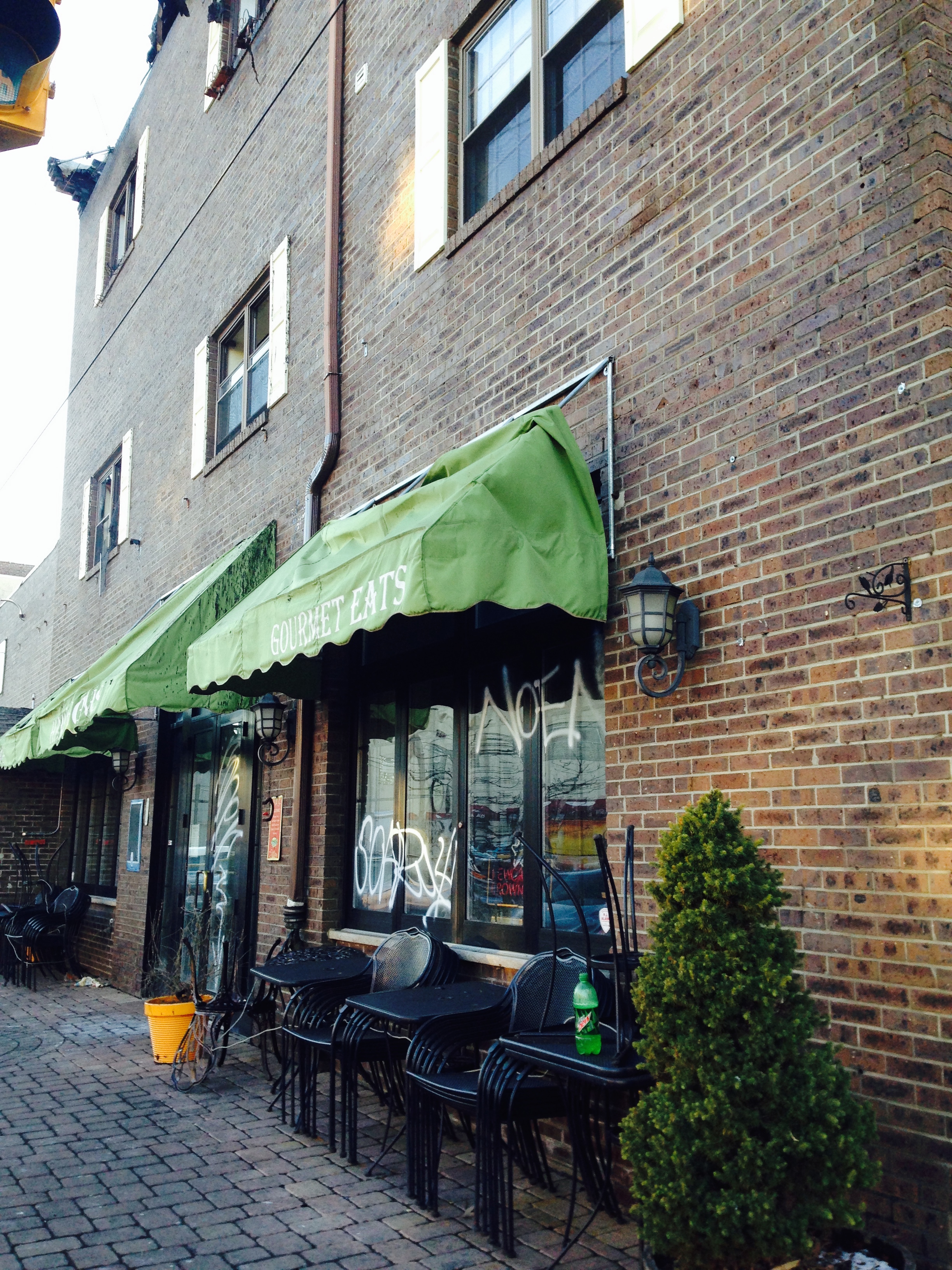
In late February, a fire ravaged the building that houses Hawthorne’s, a neighborhood restaurant. The self-proclaimed “beer boutique and gourmet eatery” was an accommodating, family-friendly place, always bustling with strollers, good friends, and good food.

The fire was on a Friday morning. On Monday, I drove by while en route elsewhere. What I saw was devastating—but not in the way you’d expect. Sure, there were charred building remains littering the sidewalk, downed awnings, and blackened brick walls. But most disturbing? Fresh, white graffiti covered the windows of the beloved eatery.

IMG_4449

To think there are people in our community who willingly set these local business owners back days? weeks? in their efforts to rebuild, refurbish, and reopen. Why are we destroying each other’s property in the dark hours of night instead of showing up on Monday morning to lend a hand?

The fire was accidental. But the graffiti was malicious. I struggled to find the words to explain it to my kids.

It’s particularly troubling that it happened to this eatery.

Hawthorne’s hovers on the border of the gentrified section of town and the public housing projects immediately to its west. It was pushing social boundaries—a veritable community frontier. From its street-side tabletops to the cozy fireplace within, Hawthorne’s fed its patrons more than just delectable fare; it served up intimacy and community as well. With no steps to navigate and a wide-open floor plan, strollers were welcome! The waiters made it a point to put the kids’ food orders in first. One of the quirky perks of the place was that you would have to get up from your table to browse the extensive beer selection. Inevitably, you’d strike up casual conversation with your fellow patrons about pale ale versus lager or exchange tidbits about Trappist monks.

People came there to connect.

I couldn’t help but lament the graffiti’s direct affront to social capital. We are already more withdrawn than ever before, retreating to our own separate spaces, accomplices to the steady decline of communal living.

In 1982, The Atlantic published George L. Kelling and James Q. Wilson’s pivotal Broken Windows Theory:  “if a window in a building is broken and is left unrepaired,” it is a “signal that no one cares,” and “all the rest of the windows will soon be broken.”

The ripple effects are devastating:  “In response to fear people avoid one another…” Residents will think that “crime…is on the rise” and “[t]hey will use the streets less often, and when on the streets will stay apart from their fellows, moving with averted eyes, silent lips, and hurried steps.”

It’s over 30 years later. Gone are the days of block parties and cookouts. We’re reluctant to send our children to the local convenience store or bus stop alone. Rarely are we responsible for the neighbor’s kids. Instead we turn inward, parent privately, and rely on Facebook, Twitter, and other such networks to connect. But have we cultivated a parenting cyber-community in the absence of an actual one?

No matter how “social” media can get, there’s no substitute for human contact. If fear, or complacency?, keeps us indoors, our communities steadily weaken, our kids become disconnected…we all suffer.

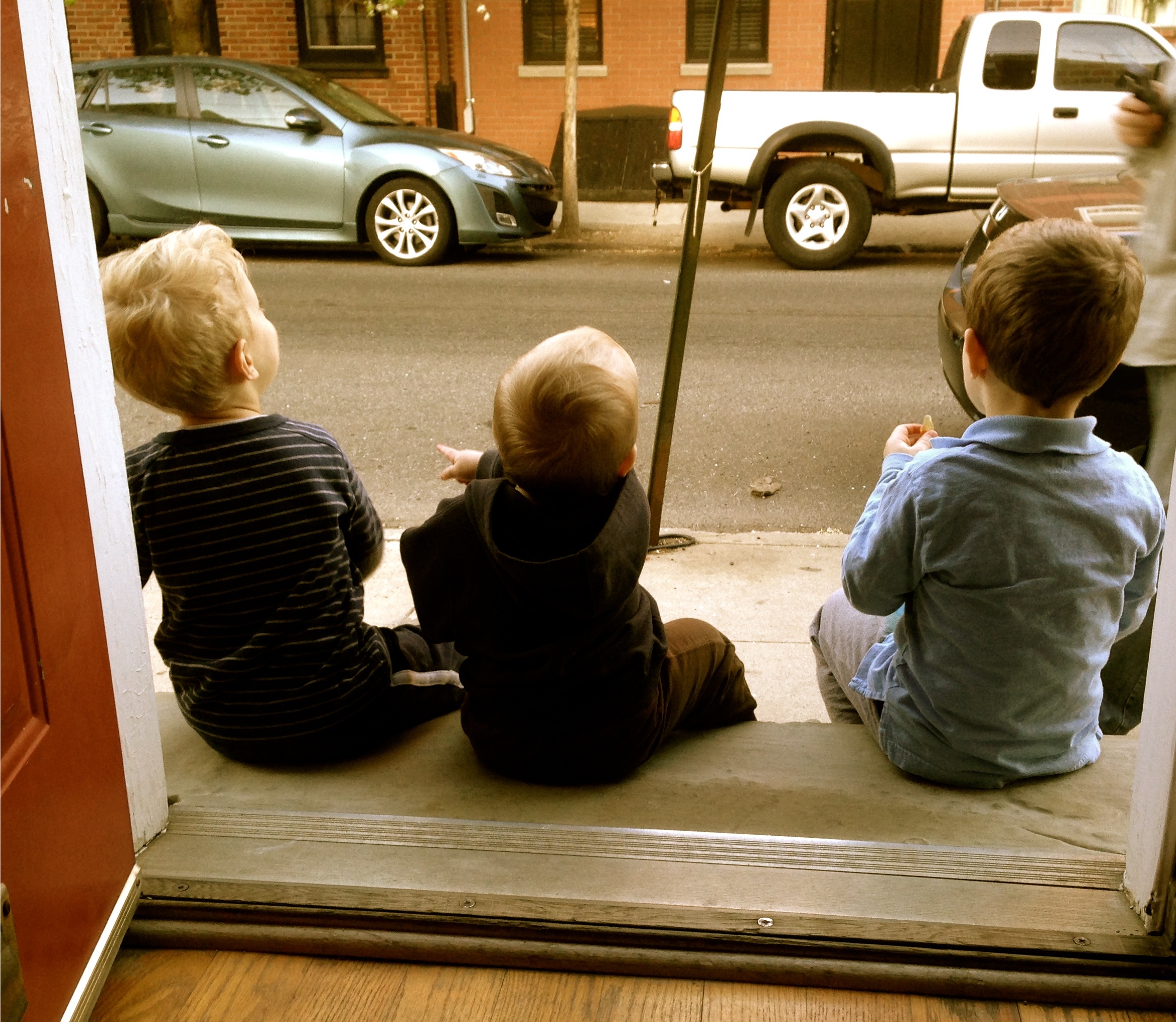
I’ve written here before about how at our home, a 1920s Philadelphia row house, we sit on our front stoop as a way to bring the outside in. What began as a way for me to feel connected during the sometimes lonely warm-weather days of my first maternity leave has evolved into a family pastime. The boys anticipate the garbage trucks on Thursdays. Scope out the mailman. Learn the bus route. The older boys check the weather. Or they stand on the top step, steadying themselves with one hand on the doorframe, little necks craned and faces hopeful as they impatiently watch for Daddy’s return home.

IMG_4994

One morning last week, I stood on my stoop feeling sorry for myself because the beginnings of rain meant I had to unload the double stroller and transfer many boys and bags into the minivan. I all but avoided making eye contact with the (sometimes too) talkative older gentleman across the street. Determined, he crossed, came to my side, and shared that they’re burying his wife today. She died on Wednesday.

photo-44

When we sit on the stoop, it feels like we’re letting people in. Letting them affect us. Making the world a little smaller. Making the outside feel like an extension of our home. Allowing people to see who we are and where we live, instead of being afraid, guarded, and “siloed” all the time.

And, in turn, my kids learn how to thank the mailman and be kind to their neighbors.

I want them to live in the world. To be curious about other people. Who they are, where they’re going. I want them to experience true empathy and wonder. To understand what it looks like to take the bus to work. To appreciate the distinct people and paths in our surroundings. To not only be preoccupied with our own comings and goings; to be comfortable with themselves, wherever they are.

I want them to marvel at the commonplace, the everyday. To not need anything more. The landscape of our city street, these passers-by, this steady rhythm of life being lived. This is entertainment enough.

Even when the rain threatens, we walk. I will miss this city life, when the inevitable pull of convenience and circumstance takes us elsewhere. When the practical overshadows the ideal.

photo-60

When I saw the Hawthorne’s graffiti, I felt fear. But not of vandals or crime. A fear that the quaint, idyllic image of the 1950s town—kids running rampant in the streets, unattended and unafraid, wild and free—is getting even farther out of reach. As Kelling and Wilson acknowledge, for those “whose lives derive meaning and satisfaction from local attachments,” the pernicious effects of broken windows “will matter greatly . . . [F]or them, the neighborhood will cease to exist except for a few reliable friends whom they arrange to meet.”

If we want to reclaim the “village” model of raising our children, we need to create a safe space in which to do so. Our families, our communities, need to take to the streets—not only once a year, or with a dedicated project in mind, but every day, in small ways. Turn on our porch lights. Whenever possible, walk to our destinations instead of drive. Make eye contact and smile at the people we pass—even if they look menacing. Especially if they look menacing. We need to look out for each other. Get out from behind our screens and onto our screened-in porches. Open our windows and sit on our front stoops. We need to make this world a little smaller–by not being afraid to be a part of it, to make it our own.

So let’s get out—and let the outside in.

After all, open windows aren’t easily broken.